
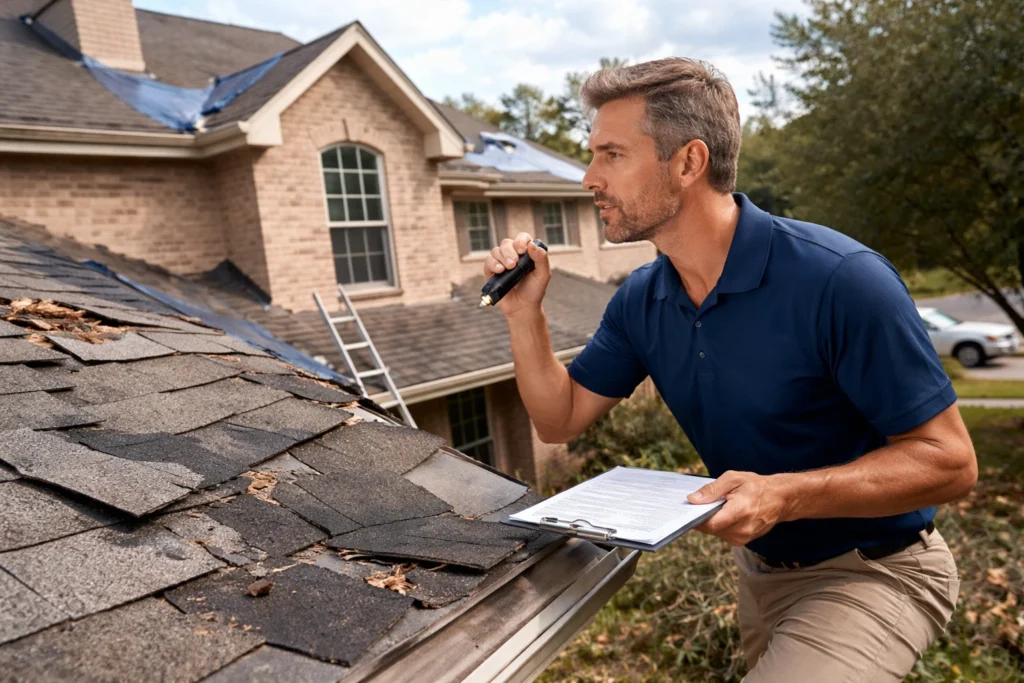
When a storm tears through Frisco or a pipe bursts in the middle of the night, panic sets in fast. And in that moment, one question quietly determines how your claim will unfold: do you need a homeowner property damage adjuster?
Most homeowners don’t think about this until they’re already in the middle of a claim. By then, the insurance company has inspected the property, written an estimate, and possibly even issued a payment. The numbers look official. The paperwork feels final. But is it accurate?
Let’s slow this down.
Your home is likely your largest asset. The way your insurance claim is handled directly impacts your financial recovery. Understanding what a homeowner property damage adjuster does — and when you need one — can change everything.
What Is a Homeowner Property Damage Adjuster?
A homeowner property damage adjuster is a licensed professional who evaluates property damage and helps manage the insurance claim process. But here’s the key distinction: not all adjusters work for you.
There are three types.
| Type | Who They Work For | Who Pays Them | Who They Represent |
| Staff Adjuster | Insurance Company | Insurance Company | Insurance Company |
| Independent Adjuster | Insurance Company (contracted) | Insurance Company | Insurance Company |
| Public Adjuster | Homeowner | Percentage of claim | Homeowner |
Only a public adjuster — a type of homeowner property damage adjuster — represents the homeowner directly.
That difference matters more than most people realize.
Insurance company adjusters are not your enemy. But they are paid by the carrier. Their job is to evaluate the claim within company guidelines. A homeowner property damage adjuster works exclusively for you, reviewing the policy, inspecting damage independently, and negotiating on your behalf.
In Texas, public adjusters must be licensed by the Texas Department of Insurance. That means training, testing, and regulatory oversight. It’s not a casual profession.
Why This Matters in Frisco, Texas
Frisco homeowners face unique risks.
North Texas storms are aggressive. Hail, high winds, sudden downpours. We’ve all seen it — one neighborhood shredded while the next street looks untouched.
Here are the most common claims locally:
1. Hail and Wind Damage
Roof shingles lifted. Gutters dented. Fences flattened. Sometimes the damage is obvious. Sometimes it’s subtle and progressive.
2. Water Damage
Slab leaks. Appliance failures. Frozen pipe bursts during sudden cold snaps. Water travels farther than you think — and hides behind walls.
3. Fire and Smoke Damage
Electrical malfunctions. Kitchen accidents. Even small fires can cause widespread smoke damage requiring specialized cleaning.
4. Structural and Storm Impact
Garage doors buckling. Window failures. Interior water intrusion after roof compromise.
In larger claims, a homeowner property damage adjuster becomes especially valuable because these losses often involve multiple components — roofing, insulation, drywall, flooring, code upgrades, and more.
One missed line item can mean thousands of dollars left unrecovered.
What a Homeowner Property Damage Adjuster Actually Does
Let’s break this down into practical steps. Not theory. Action.
1. Policy Review and Coverage Analysis
Before anyone climbs a roof or measures drywall, the policy must be reviewed carefully.
Replacement cost or Actual Cash Value?
Are there roof exclusions?
Is ordinance and law coverage included?
What about depreciation holdbacks?
Many homeowners assume they’re fully covered — until they see depreciation deductions or coverage limits they didn’t know existed.
A homeowner property damage adjuster reads the fine print and aligns the claim with the policy language. That alone can shift the outcome.
2. Full Damage Inspection
Insurance inspections can be thorough. But they are often brief.
A homeowner property damage adjuster conducts a detailed inspection, which may include:
- Roof square measurements
- Flashing and ridge cap review
- Moisture readings in walls
- Attic ventilation checks
- Interior water mapping
- Photo documentation of every damaged component
The goal is documentation. Not assumptions.
If damage isn’t documented, it doesn’t exist in the claim file.
3. Claim Preparation and Estimating
This is where many claims shift direction.
Public adjusters prepare line-by-line estimates using industry software. They calculate:
- Material costs
- Labor rates
- Removal and disposal
- Code upgrades
- Painting and finish work
- Overhead and profit when applicable
Here’s the reality: insurance estimates can miss items. Not always intentionally. Sometimes it’s oversight. Sometimes it’s scope interpretation.
But if it’s not included, it’s not paid.
A homeowner property damage adjuster prepares a competing estimate when necessary and submits it for review.
4. Negotiation with the Insurance Carrier
This part intimidates homeowners.
Emails. Supplements. Re-inspections. Appraisal discussions.
A seasoned homeowner property damage adjuster understands the negotiation framework. They know how to request supplements properly. They know how to challenge scope discrepancies. And they understand timelines.
This reduces stress. It also often increases settlements.
5. Monitoring the Claim Until Final Payment
Many claims don’t end with the first check.
There may be:
- Depreciation recoveries
- Supplemental payments
- Contractor change orders
- Additional damage discovered during repairs
Without someone tracking the file, homeowners can miss follow-up payments they’re entitled to receive.
That oversight adds up.
Signs You Should Hire a Homeowner Property Damage Adjuster
Not every claim requires one. Small cosmetic claims? Maybe not.
But consider hiring one if:
- Your claim exceeds $25,000
- The insurance estimate feels low
- The claim was partially denied
- Multiple rooms are affected
- The damage involves roofing and interior components
- You feel rushed to settle
- You simply don’t have time to manage paperwork
If you’re uncomfortable interpreting the estimate, that’s a signal.
How Much Does a Homeowner Property Damage Adjuster Cost in Texas?
Most homeowner property damage adjusters work on a percentage basis. In Texas, that typically ranges between 5% and 10% of the final settlement.
There’s usually no upfront fee.
Let’s look at a simple example:
| Claim Settlement | Adjuster Fee (10%) | Homeowner Receives |
| $20,000 | $2,000 | $18,000 |
| $40,000 | $4,000 | $36,000 |
| $60,000 | $6,000 | $54,000 |
Now here’s the question that really matters:
If the adjuster increases your claim from $30,000 to $45,000, is the fee worth it?
For many homeowners, the answer is yes. Especially when reduced stress is factored in.
Risks of Handling a Large Claim Alone
Let’s be direct.
Here’s what can happen without professional oversight:
- Missing code-required upgrades
- Accepting roof repair when replacement is warranted
- Overlooking moisture behind walls
- Misunderstanding depreciation holdbacks
- Agreeing to first offer prematurely
- Failing to submit supplements properly
Insurance claims are detailed. Small scope differences can mean thousands.
I’ve seen homeowners assume they were fully compensated — only to discover months later that interior insulation or flashing wasn’t included.
Once repairs are done, leverage disappears.
How to Choose the Right Homeowner Property Damage Adjuster in Frisco
Not all adjusters operate the same way.
Here’s what to verify:
1. Licensing
Confirm they’re licensed in Texas. You can verify through the Texas Department of Insurance.
2. Local Experience
North Texas storm claims are unique. Roofing systems, municipal codes, and weather patterns matter.
Ask how many Frisco claims they’ve handled.
3. Ask These Five Questions
- How long have you been licensed?
- What types of claims do you handle most?
- How do you communicate updates?
- What percentage do you charge?
- Do you handle supplements and re-inspections?
Clarity upfront prevents frustration later.
What the Claim Timeline Typically Looks Like
Here’s a simplified version of what homeowners can expect:
- Damage occurs
- Emergency mitigation (if needed)
- Claim filed
- Insurance inspection
- Estimate issued
- Adjuster review (if hired)
- Supplement negotiations
- Settlement agreement
- Repairs begin
- Final payments issued
Timeframe varies. Minor claims may resolve in weeks. Larger structural claims can take months.
Patience is part of the process.
A Realistic Frisco Scenario
Imagine a hailstorm hits a Frisco neighborhood.
The insurance company inspects and offers $18,000 for roof repair and minor interior paint. The homeowner feels uneasy but isn’t sure why.
A homeowner property damage adjuster conducts a second inspection.
Findings:
- Roof shingles show functional damage requiring full replacement
- Flashing damaged along chimneys
- Interior insulation compromised
- Code-required drip edge missing
- Additional siding damage not included
Revised estimate: $32,000.
After negotiations, the carrier agrees to $29,500.
Even after a 10% fee, the homeowner nets more than the original offer — and the repairs are done properly.
That’s the difference documentation makes.
Frequently Asked Questions
They evaluate your property damage, review your insurance policy, and negotiate with the carrier to help you receive a fair settlement.
Consider hiring one for large, complex, or disputed claims, especially if the insurance estimate seems low.
Yes, in many cases you can still hire one to review and potentially supplement the claim before final closure.
They typically work on a percentage of the final settlement amount, with no upfront fees.
Yes, public adjusters are licensed and regulated by the Texas Department of Insurance.
No, hiring a homeowner property damage adjuster does not directly affect your premium; claim history does.
They can review the denial and determine whether additional documentation or negotiation may lead to reconsideration.
Yes, they typically manage inspections, paperwork, and negotiations on your behalf.
For minor claims, it may not be necessary, but for larger losses the added oversight can be valuable.
You can confirm their license through the Texas Department of Insurance and review their local experience.
Final Thoughts for Frisco Homeowners
Storms don’t schedule themselves conveniently. Pipes don’t burst when it’s calm. Fires don’t wait for financial preparedness.
When damage happens, clarity becomes power.
A homeowner property damage adjuster doesn’t create coverage that doesn’t exist. They ensure the coverage you already pay for is applied correctly. That distinction is critical.
Your home in Frisco isn’t just property. It’s equity. Stability. Security.
If you’re facing a complex claim, feeling uncertain about an estimate, or simply want a second set of trained eyes on your damage assessment, understanding the role of a homeowner property damage adjuster could protect more than just your roof.
It could protect your financial footing.
And that’s worth paying attention to.