
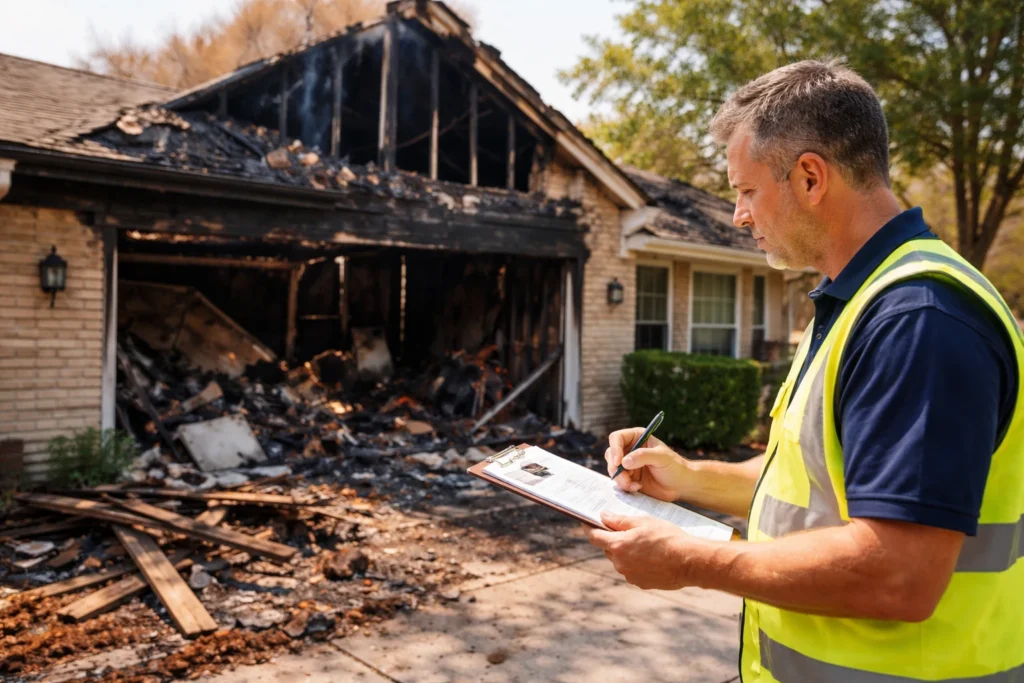
A house fire changes everything in a matter of minutes. The damage is obvious. The stress? Even more so. This is exactly where a fire insurance adjuster becomes one of the most important people you can bring into your corner. I’ve seen homeowners rush through the claims process, hoping the insurance company will “handle it.” Sometimes it works out. Often, it doesn’t. That’s the reality. Without the right guidance, you can leave thousands sometimes tens of thousands on the table.
This guide breaks it all down. What a fire insurance adjuster does. When to hire one. How they help you get a fair settlement. And most importantly, how to avoid costly mistakes along the way. Let’s get into it.
What Is a Fire Insurance Adjuster?
A fire insurance adjuster is a licensed professional who evaluates fire damage, interprets your insurance policy, and helps settle your claim. Simple definition. But the role is much bigger than it sounds.
There are three types of adjusters you’ll encounter:
- Insurance Company Adjuster
Works for your insurer. Their job is to protect the company’s financial interests. - Independent Adjuster
Hired by insurance companies on a contract basis. Still represents the insurer. - Public Adjuster (Fire Insurance Adjuster)
Works for you. The homeowner. Your advocate.
That distinction matters more than most people realize. One side is trying to minimize payouts. The other is focused on getting you everything you’re entitled to.
What Does a Fire Insurance Adjuster Actually Do?
This is where things get practical. A fire insurance adjuster doesn’t just “look at damage.” They manage the entire claim process from start to finish.
Here’s what that includes:
Key Responsibilities
- Damage Assessment
Identifying visible and hidden damage smoke, soot, structural issues. - Policy Review
Breaking down what your policy actually covers (and what it doesn’t). - Detailed Documentation
Creating a full inventory of damaged items furniture, electronics, clothing. - Repair Cost Estimation
Calculating accurate rebuild and replacement costs. - Negotiation
Handling back-and-forth with the insurance company. - Claim Dispute Resolution
Challenging low offers or denied claims.
This process can sometimes feel complex almost like unraveling a system of nonlinear dynamics where small details can lead to very different outcomes in your final settlement.
Why Frisco Homeowners Need a Fire Insurance Adjuster
Frisco isn’t just any city. Homes here often have higher property values, modern builds, and complex layouts. That makes fire claims more detailed and more expensive.
Here’s why a fire insurance adjuster is especially valuable in Frisco:
- Higher Stakes
Bigger homes mean larger claims. Even small miscalculations can cost thousands. - Complex Materials
Custom cabinetry, premium flooring, smart home systems—these aren’t easy to price. - Strict Insurance Scrutiny
Large claims often face more pushback from insurers. - Emotional Pressure
After a fire, decision-making becomes harder. Mistakes happen fast.
A fire insurance adjuster steps in and brings clarity when you need it most.
When Should You Call a Fire Insurance Adjuster?
Short answer? Early.
Longer answer it depends on your situation, but sooner is almost always better.
Ideal Timing
- Immediately after the fire
- Before filing your claim
- After receiving a low settlement
- If your claim is delayed or denied
Red Flags You Shouldn’t Ignore
- The insurance offer feels too low
- You’re confused by policy language
- The process is dragging on
- You’re being asked for excessive documentation
If any of these sound familiar, it’s time to bring in a fire insurance adjuster.
The Fire Insurance Claim Process (Step-by-Step)
Understanding the process helps you stay in control. Let’s walk through it.
Step-by-Step Breakdown
- Emergency Response
Secure the property. Ensure safety first. - Notify Your Insurance Company
Start the claim process. - Initial Inspection
The insurer sends their adjuster. - Documentation & Inventory
Listing everything damaged or lost. - Claim Submission
Filing the official claim. - Negotiation Phase
Back-and-forth discussions on value. - Settlement & Repairs
Final payout and rebuilding begins.
Where a Fire Insurance Adjuster Helps Most
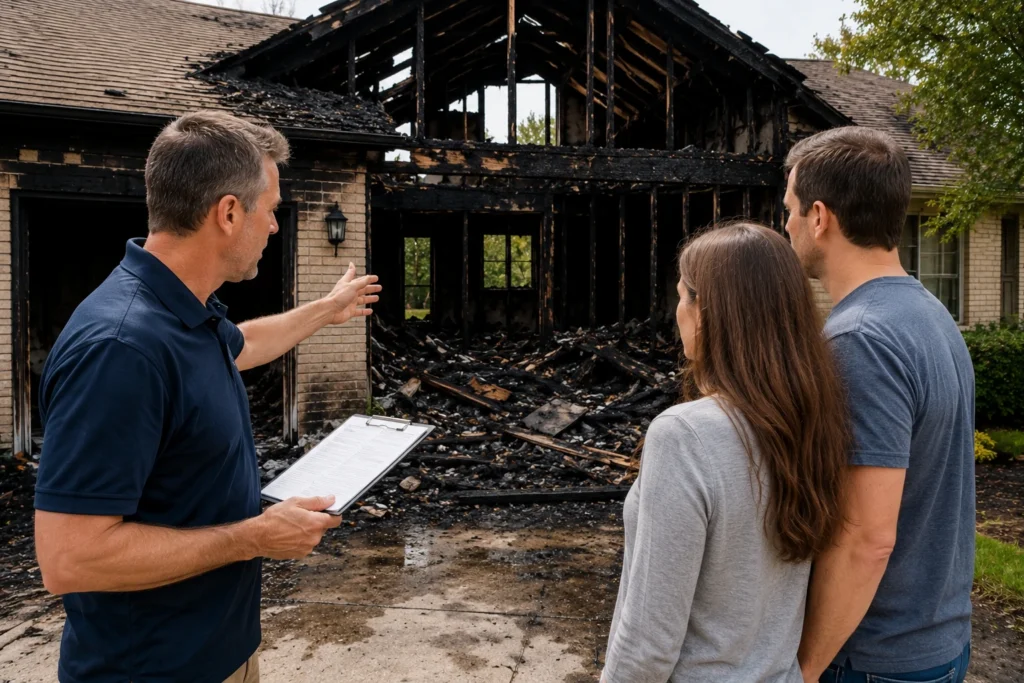
| Stage | Value Added |
| Inspection | Identifies overlooked damage |
| Documentation | Creates detailed, accurate records |
| Negotiation | Pushes for higher, fair settlement |
| Settlement | Ensures nothing is missed |
How a Fire Insurance Adjuster Maximizes Your Claim
This is where the real impact happens. A skilled fire insurance adjuster doesn’t just accept what’s offered they build a case.
Key Strategies
- Finding Hidden Damage
Smoke damage inside walls. Electrical issues. Structural weakening. - Accurate Valuation
Not just “used value” but proper replacement cost. - Policy Leverage
Identifying clauses that work in your favor. - Negotiation Tactics
Presenting evidence that supports higher payouts.
Real-World Scenario
A homeowner receives a $120,000 settlement offer. Sounds decent, right?
A fire insurance adjuster reviews the claim. Recalculates. Documents everything properly.
Final settlement? $185,000.
Common Mistakes Homeowners Make After a Fire
These mistakes happen all the time. Avoid them.
Costly Errors
- Accepting the first offer too quickly
- Throwing away damaged items before documentation
- Underestimating the extent of damage
- Misreading policy coverage
- Not hiring a fire insurance adjuster
Fire Insurance Adjuster vs. Insurance Company Adjuster
| Factor | Fire Insurance Adjuster | Insurance Adjuster |
| Works For | You | Insurance Company |
| Goal | Maximize your claim | Minimize payout |
| Outcome | Often higher settlements | Often lower offers |
How to Choose the Right Fire Insurance Adjuster in Frisco
What to Look For
- Proper licensing
- Fire claim experience
- Local expertise
- Transparent fees
- Strong reputation
Questions to Ask
- How many fire claims have you handled?
- What’s your success rate?
- How are fees structured?
How Much Does a Fire Insurance Adjuster Cost?
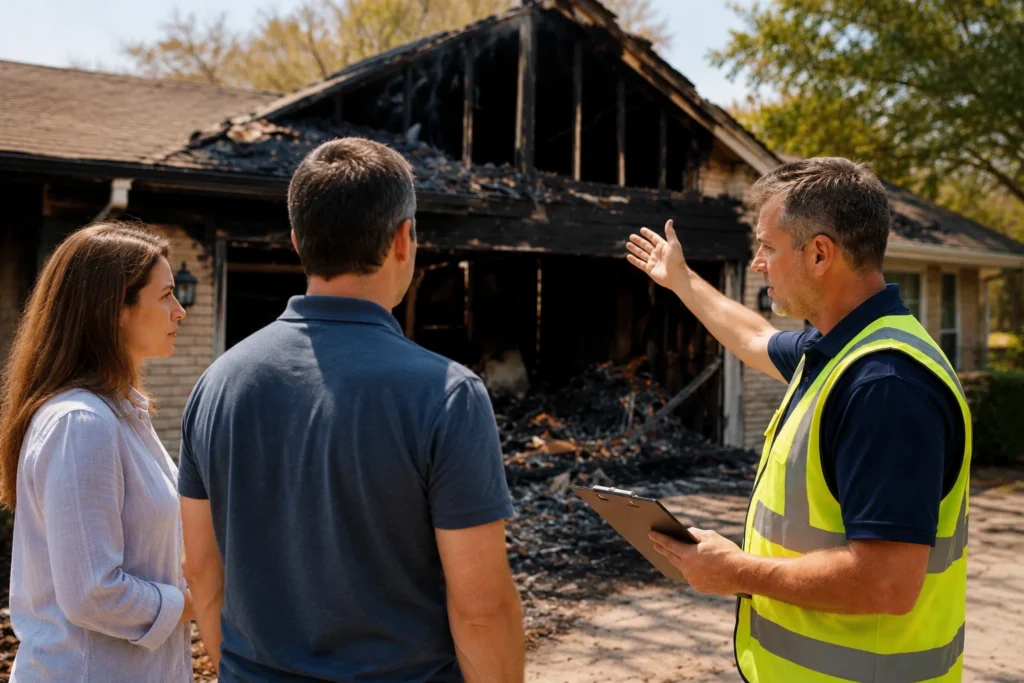
- Typically 5%–15% of the claim
- No upfront cost
- Paid only if you win
In many cases, hiring a fire insurance adjuster results in a significantly higher net payout even after fees.
What to Expect When Working With a Fire Insurance Adjuster
- Initial consultation
- Full inspection
- Detailed documentation
- Negotiation handled for you
Your role? Stay informed and provide input when needed.
Real-Life Scenario: Fire Claim in Frisco
A homeowner faces major fire damage.
Initial offer: $95,000
After hiring a fire insurance adjuster: $140,000
That difference speaks for itself.
Final Thoughts: Protecting Your Investment After a Fire
A fire doesn’t just damage property. It disrupts your life. The claims process should help you recover not create more stress. And yet, without proper guidance, it often does. A fire insurance adjuster brings clarity, strategy, and results. If you’re dealing with fire damage in Frisco, don’t go through it alone.
FAQs
A fire insurance adjuster evaluates fire damage, documents losses, and negotiates with the insurance company to help maximize your claim payout.
You should hire a fire insurance adjuster as soon as possible after a fire, especially before accepting any settlement offer.
Yes, because your insurance company’s adjuster works for them, while a fire insurance adjuster works on your behalf to protect your interests.
Most fire insurance adjusters work on a contingency basis, typically charging a percentage of the final settlement with no upfront fees.
In many cases, yes they identify overlooked damages and ensure accurate valuations, which often leads to higher settlements.
A public (fire insurance) adjuster represents you, while an insurance adjuster represents the insurance company.
A fire insurance adjuster can review your case, gather additional evidence, and help reopen or dispute the denied claim.
It can take weeks to months depending on the complexity of the damage, but a fire insurance adjuster can help speed up the process.
You’ll need photos, receipts, a list of damaged items, and your insurance policy your adjuster can help organize everything.
Look for proper licensing, strong reviews, fire claim experience, and a clear fee structure before making your decision.